Carpentry
Framing, installation, finish work, measurement, and jobsite safety.
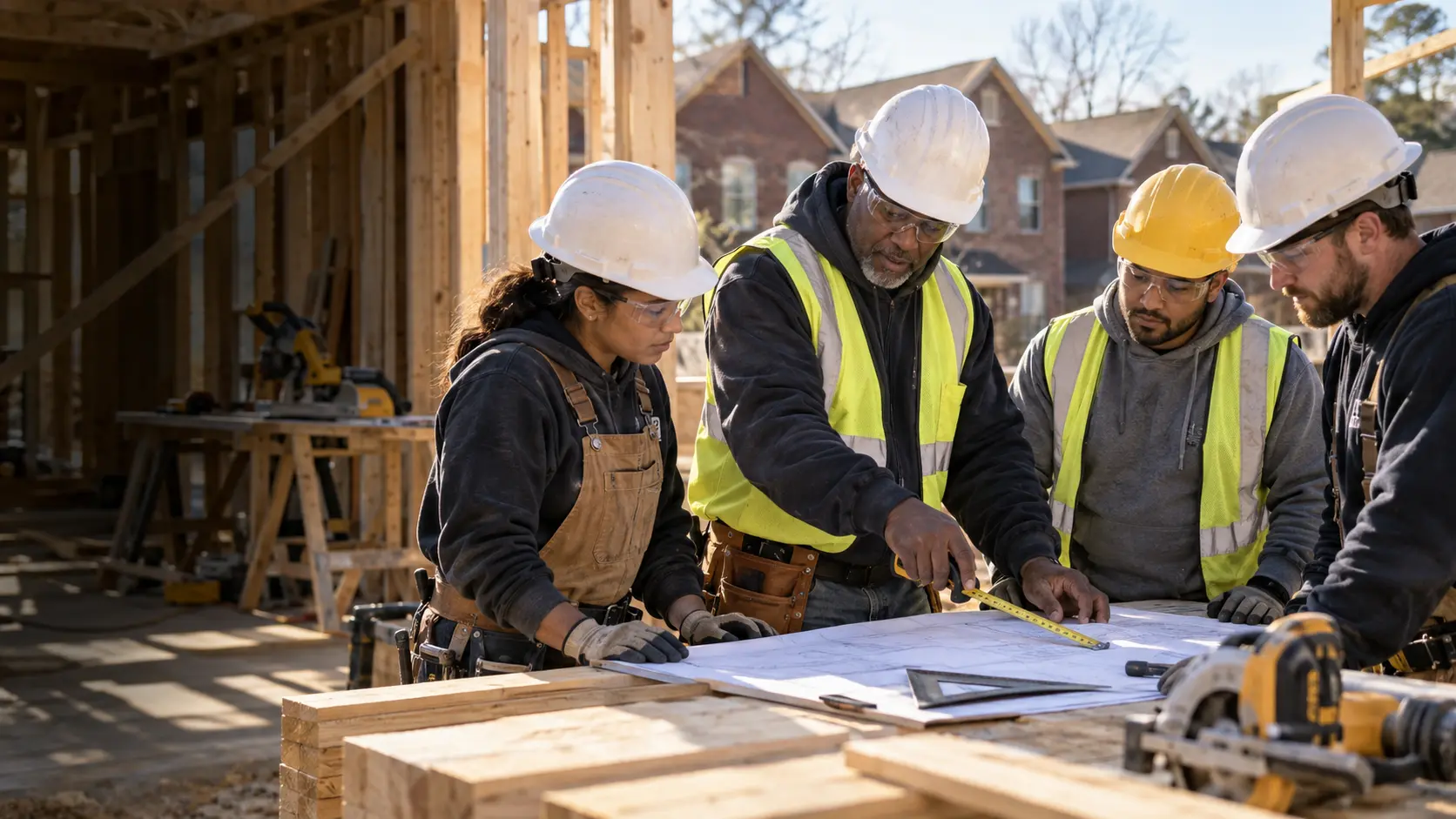
Homes for Honor | Memphis workforce pathway
A developing route from reentry readiness to construction skills, paid employment opportunities, builder mentorship, and long-term retention.
AI-generated concept image. The people and jobsite shown are not actual participants, employees, builders, or Homes for Honor properties.
Program intent
Justice-involved individuals and returning citizens can face immediate barriers to work, including identification, transportation, tools, training access, employer screening, housing instability, and the need to earn income quickly. The proposed pathway is designed to coordinate those needs instead of treating training as a stand-alone event.
Homes for Honor projects may create a practical learning and employment environment for qualified participants while helping participating builders develop a safer, more reliable construction workforce. The planning model includes union and nonunion options, registered apprenticeship and other approved training routes, TCAT or community-college connections, and open lawful contractor participation.
Participant pathway
Each step depends on final partner capacity, participant eligibility, employer requirements, and available opportunities.
Connect with a reentry or workforce partner for identification, work-readiness assessment, barrier planning, and referrals for housing, transportation, health, supervision, or other stabilizing support.
Complete the safety orientation, foundational skills, trade exploration, classroom instruction, and pre-apprenticeship requirements specified by the selected training pathway.
Compete for an available position with a participating builder, contractor, or apprenticeship sponsor and receive structured on-the-job learning and mentorship when hired.
Track attendance, skills, wage progress, credentials, placement quality, and retention while coordinating reasonable supportive-service referrals that help participants stay employed.
Construction occupations
The internal Homes for Honor workforce plan identifies these construction pathways for partner development. Specific occupations and openings will depend on builder demand and approved training capacity.
Framing, installation, finish work, measurement, and jobsite safety.
Entry pathways supporting licensed electrical work and code-compliant installation.
Supervised piping, fixture, and systems training through qualified partners.
Heating, cooling, ventilation, controls, maintenance, and energy performance.
Site preparation, material handling, labor, safety, and production support.
Training pathways for approved operators working under site and safety rules.
Painting, drywall, flooring, and other detail-focused residential trades.
Builder and employer pathway
The Homes for Honor planning model calls for large, mid-size, and emerging builders plus subcontractors. Prospective partners may help define real job demand, skill standards, worksite mentorship, fair-chance hiring, wage progression, safety expectations, and retention practices.
Support around the job
The final service mix will depend on qualified partner capacity and funding. Planning priorities include the following.
Official resources available now
Homes for Honor enrollment is not open. These government resources provide current assistance and explain established programs.
Statewide reentry information and connections to American Job Center services for justice-involved individuals and second-chance employers.
↗ Greater MemphisFind an American Job CenterFree job-search, workshop, training, certification, and referral services, including support for justice-involved job seekers.
↗ ApprenticeshipHow Registered Apprenticeship worksOfficial guidance on paid employment, progressive wages, structured mentorship, classroom instruction, and portable credentials.
↗ ConstructionConstruction apprenticeship informationFederal information for career seekers, employers, and partners using apprenticeship to build construction talent.
↗ OpeningsApprenticeship Job FinderSearch current apprenticeship opportunities and registered partners. Availability and employer requirements vary.
↗Official resource links reviewed September 13, 2026. Program rules and openings can change; confirm details directly with the responsible agency or employer.
For workforce and reentry organizations
CFGS helps organizations define eligibility, recruitment, employer demand, training, supportive services, placement, wages, retention, evidence, and responsible recidivism measures before pursuing a funding opportunity.
Get your readiness pathwayProgram questions
Not yet. The pathway is in planning and partner development. An inquiry records interest only and does not reserve a place or guarantee eligibility.
No. CFGS supports coordination, funding readiness, and public information. Participating builders or contractors will make employment decisions, and any Registered Apprenticeship must be operated by an approved sponsor.
No automatic program rule has been published. Final eligibility will depend on approved program criteria, the duties involved, applicable law, training requirements, and each participating employer's documented hiring process.
Help shape the Memphis pathway
CFGS welcomes early interest from reentry participants, builders, contractors, apprenticeship sponsors, training providers, American Job Center partners, supportive-service organizations, funders, and public agencies.